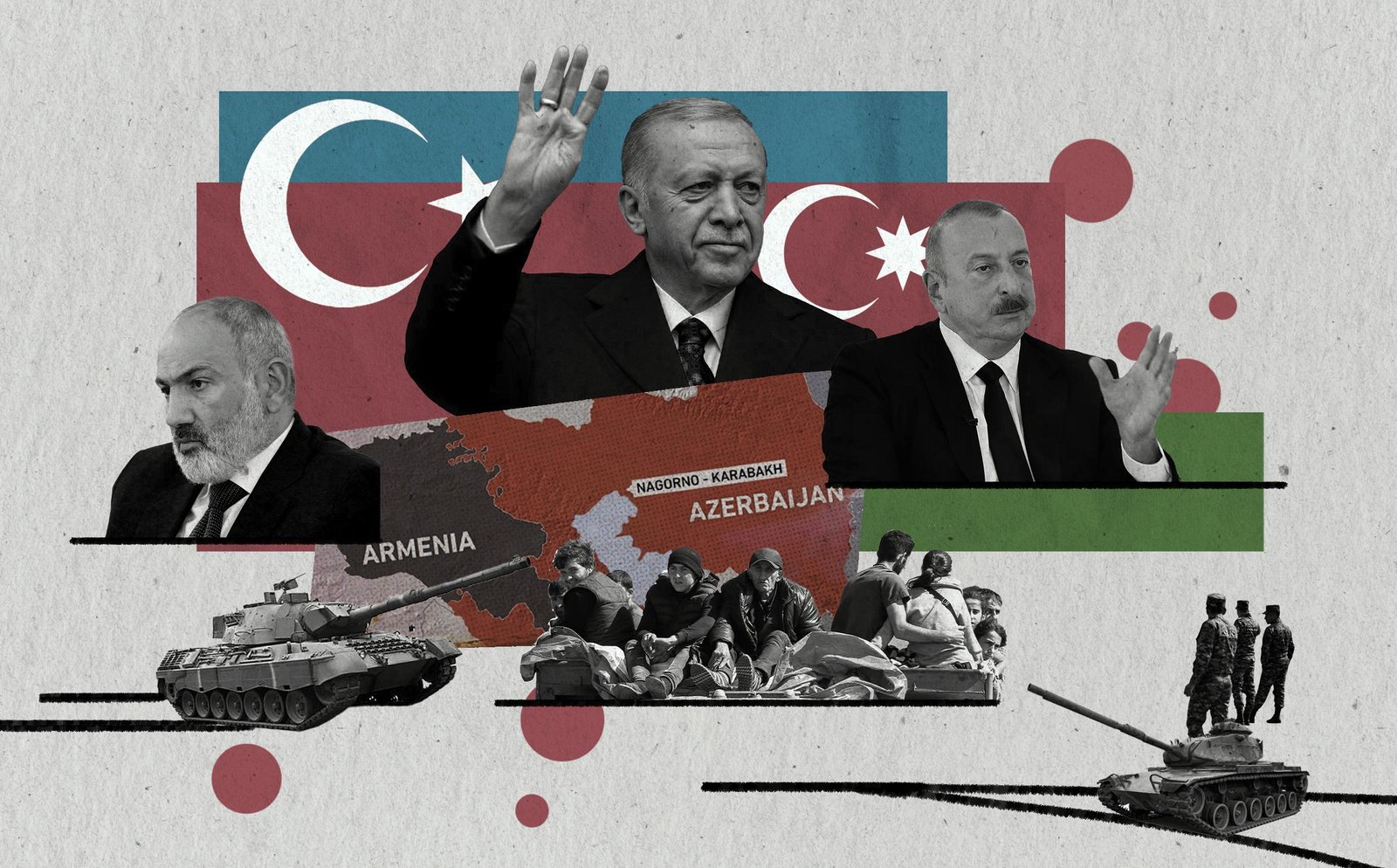
In a landmark shift for the South Caucasus, the leaders of Azerbaijan and Armenia held a five-hour face-to-face meeting on July 10 in Abu Dhabi—without any international mediation. The talks between President Ilham Aliyev and Prime Minister Nikol Pashinyan marked the first time the two sides engaged directly on critical bilateral issues including border delimitation, a peace treaty, and plans for the Zangezur corridor, bypassing both Western and Russian involvement.
The Zangezur corridor—an overland route crossing Armenian territory to connect mainland Azerbaijan with its exclave Nakhchivan—has long been a strategic flashpoint. Until recently, Baku and Yerevan entertained the theoretical possibility of the Russian FSB controlling this transport link, with Moscow eyeing it as a tool for both economic leverage and sustained political influence in the region.
That prospect now appears to be fading.
Shift away from Moscow’s influence
The direct talks in Abu Dhabi signal a notable pivot: both countries are seeking bilateral solutions without third-party mediation, especially from Russia. As analyst Ilgar Velizade noted, the meeting is a “signal of maturity and independence” from Baku and Yerevan, reducing Moscow’s longstanding role as regional arbiter.
Recent deterioration in Russia’s relations with both Azerbaijan and Armenia further weakens its grip on the South Caucasus. Moscow’s early withdrawal of peacekeepers from Nagorno-Karabakh, along with the end of Russian border guard missions on Armenia’s frontiers with Turkey and Iran, underscore Yerevan’s distancing from Russian security structures. Armenia has suspended its participation in the CSTO and shown growing interest in cooperation with China, as reflected in its decision to join the Shanghai Cooperation Organization.
Meanwhile, Baku is reportedly reviewing a proposal from Yerevan to involve a U.S.-based logistics company to manage cargo inspection and logistics along the corridor. Such a move would sideline Russian oversight entirely.
A new geopolitical era in the South Caucasus
The gradual normalization of ties between Armenia, Azerbaijan, and Turkey holds the potential to reshape Eurasian transit dynamics. Should borders open fully, new shortest routes could emerge between the Caspian and the Mediterranean via the Zangezur corridor, and between the Black Sea and the Persian Gulf. These developments would not only boost trade but redefine the geopolitical weight of the region—without Russian participation.
Regional realignment is already underway. Armenia, Azerbaijan, and Georgia are increasingly turning toward cooperation with Beijing and Ankara. Georgia’s recent decision to award the construction of the Anaklia deep-sea port to Chinese investors exemplifies China’s growing footprint in the region.
Even Russia’s traditional ally Iran opposes potential Russian control over the Zangezur route, fearing diminished access to Armenian territory. Tehran’s concerns align with a broader pattern of waning Russian appeal, as local actors push for independent, commercially viable partnerships with global players.
Russia’s diminishing leverage
With the end of the Nagorno-Karabakh dispute, Russia’s ability to exploit bilateral tensions between Armenia and Azerbaijan has sharply declined. Both countries are now pursuing normalization on their own terms, increasingly viewing Moscow not as a guarantor of stability, but as a legacy power with shrinking influence.
This changing calculus could signal a broader shift across the post-Soviet space, where former client states are seeking alternatives to Russian dependency—politically, economically, and strategically.