The European Court of Human Rights (ECHR) ruled on Tuesday that Russia bears responsibility for the 2014 downing of Malaysia Airlines Flight MH17 over eastern Ukraine, marking a historic legal milestone that directly links Moscow to one of the most shocking civilian tragedies of the war in Donbas.
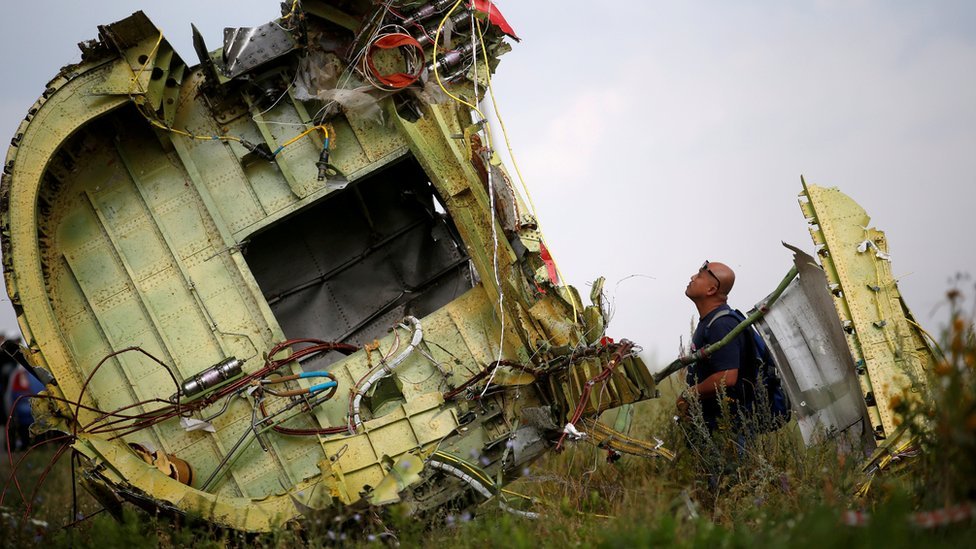
In a sweeping judgment that consolidates four interstate complaints lodged by Ukraine and the Netherlands, the court found that Russia violated several provisions of the European Convention on Human Rights, including the right to life and protection from inhuman treatment, due to its direct involvement in the conflict and the provision of a Buk missile system that shot down MH17, killing all 298 people on board.
Unanimous ruling affirms jurisdiction over Russia despite Council of Europe exit
Despite Russia’s expulsion from the Council of Europe in September 2022, the court confirmed it retains full jurisdiction over actions committed by Russia in Ukraine up to that date. The ECHR’s 17 judges unanimously upheld the admissibility of all four consolidated cases — including those related to war crimes in Donbas, illegal deportations of Ukrainian children, and the systemic human rights abuses during Russia’s full-scale invasion starting February 24, 2022.
In the MH17 case, the court concluded that the aircraft was downed by a Buk surface-to-air missile fired from territory controlled by Russian-backed forces and that the system was provided by the Russian military. Russia’s role, the ruling states, rendered it directly responsible for the deaths.
Historic support and sharp condemnation
The case marks an unprecedented moment for the ECHR, as 26 states and one international organization joined as third parties in support of Ukraine and the Netherlands — the broadest coalition in the court’s history. Dutch Defence Minister Ruben Brekelmans called the judgment “a critical step toward justice,” particularly for the families of the MH17 victims, the majority of whom were Dutch citizens.
The ECHR also demanded that Russia immediately release all unlawfully detained persons in occupied Ukrainian territories and cooperate with the establishment of an international mechanism to identify and reunite deported Ukrainian children with their families or guardians.
Moscow rejected the ruling as “null and void,” declaring it would not comply. However, the verdict arrives at a time when international momentum is building toward criminal accountability: the ruling is expected to strengthen efforts of the newly established Special Tribunal for the Crime of Aggression, the first Council of Europe-backed mechanism aiming to prosecute individual Russian leaders for launching the war.
A delayed but definitive judgment
The Strasbourg court’s ruling comes nearly 11 years after MH17 was shot down and after years of ambiguity in Europe’s collective response to Russia’s destabilizing actions in Ukraine. Legal experts and observers have pointed to the 2014–2015 period as a moment of missed deterrence. The court’s language reflects this — warning that Russia’s “scale of military operations” and rhetoric challenging Ukraine’s sovereignty “threaten the peaceful coexistence in Europe long taken for granted.”
The ECHR also highlighted the systemic nature of Russia’s abuses in Ukraine, citing mass killings, torture, forced deportations, and the suppression of Ukrainian identity through repressive education policies and filtration camps. It noted that similar hostile narratives have been used by Russia in relation to other European states, including Poland, Moldova, and the Baltic countries.
Shifting the narrative on 2014–2015
The ruling also indirectly rebukes years of Russian disinformation and narratives circulated across European media and politics, which framed the Donbas conflict as a civil war or a justified response to alleged discrimination against Russian speakers. In the light of Tuesday’s judgment, those narratives now appear as deliberate attempts to legitimize Russian aggression or — at best — misguided complicity.
The court’s conclusions represent not just legal vindication for victims but also a broader reckoning with the consequences of inaction. As international institutions now move toward prosecuting top Russian officials for aggression, the ECHR decision may mark a turning point in Europe’s resolve to hold perpetrators accountable — before future tragedies unfold.